


If your home starts to smell like a locker room when the air comes on, you are probably dealing with dirty sock syndrome in your HVAC system. This is a real term people in the heating and cooling world use for a strong, musty, gym-sock smell from your vents. It is annoying, and it can be a sign that your system needs attention.
In this guide, you will learn what dirty sock syndrome is, why it shows up in local homes, and how professional duct and coil cleaning can clear the smell. You will also see simple steps you can take to keep the problem from coming back.
What Is Dirty Sock Syndrome?
Dirty sock syndrome is a foul, musty odor that comes from your HVAC system, often right when it starts up. The smell is strongest in the first few minutes, then may fade as the system keeps running. Many homeowners say it smells like sweaty gym socks or a damp basement.
This smell usually starts at the indoor evaporator coil and nearby parts. The coil gets wet during cooling, and dust and other particles stick to the damp surface. Over time, bacteria and mold can grow on that buildup. When your air conditioner or heat pump turns on, air blows across the dirty coil and carries the odor through your ductwork and into your rooms.
The odor itself is often the main problem. In most homes, dirty sock syndrome is more of a comfort and air quality issue than a serious health threat. However, people with allergies, asthma, or other breathing problems may feel worse when they breathe air that has passed over a coil with microbial growth. That makes it important to deal with the smell rather than just trying to ignore it.
Why Nashville Homes Get That Gym-Sock HVAC Smell
Moisture is the main reason dirty sock syndrome shows up, and this area’s climate gives your HVAC system plenty of it. Warm, humid summers mean your air conditioner runs often. It pulls moisture out of the air, and that water collects on the coil and in the drain pan. If the system does not fully dry between cycles, the coil can stay damp.
When dust, pet dander, skin flakes, and other tiny particles land on a wet coil, they form a layer of buildup. Bacteria and mold feed on that organic material. Over time, this growth can create a strong smell. Many homeowners first notice it during season changes when systems switch between heating and cooling, and the coil keeps going between warm and cool conditions.
A few common issues make dirty sock syndrome more likely in homes here:
- Dirty or clogged air filters that let dust and debris build up on the coil.
- High indoor humidity from everyday life, like cooking, showers, or drying laundry inside.
- Poor airflow from closed vents, blocked returns, or undersized ductwork.
- Drain pans or drain lines that do not fully clear water, leaving standing moisture.
Different home styles add to the mix. Older homes and homes with additions may have patchwork duct systems that do not move air evenly. Townhomes and small single-family homes can have systems that cycle on and off often. All of these patterns leave more time for moisture and buildup to sit in your HVAC system, which makes odors stronger.
How Duct and Coil Cleaning Fixes Dirty Sock Syndrome
Since dirty sock syndrome starts with buildup and microbial growth, the most direct fix is a thorough cleaning by a trained technician. The goal is to remove the material that feeds bacteria and mold and to clear the places where moisture collects. Our own duct cleaning process is built around reaching those exact trouble spots rather than just cleaning what is easy to access.
Duct cleaning focuses on the pathways that carry air through your home. Over time, dust, pet hair, and other debris settle inside the ducts. That material can hold onto smells and give bacteria more places to grow. During duct cleaning, the technician uses tools that reach deep into the system, loosen buildup, and remove it with vacuum equipment. This helps reduce musty odors and improves airflow.
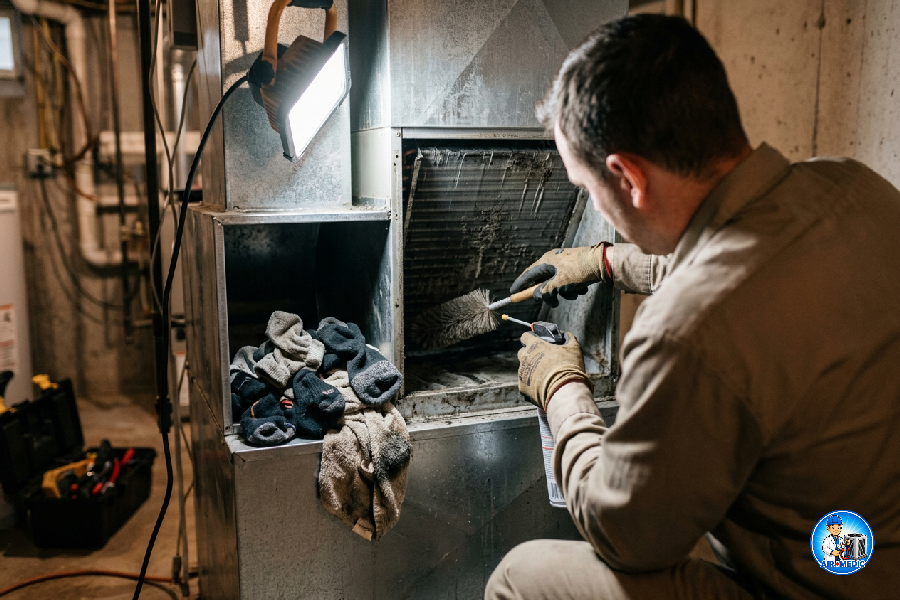
Evaporator coil cleaning targets the main source of dirty sock syndrome. The technician accesses the coil inside the air handler, then applies an HVAC-safe coil cleaner that foams and lifts dirt from the metal fins. After the cleaner does its work, the coil is rinsed or allowed to drain according to the product directions. This process removes the slimy film and residue that can hold odors.
During the same visit, a good service also includes cleaning the drain pan and checking the drain line. If the pan has sludge or standing water, it will be cleared and treated. If the drain line is clogged, it will be opened so water can flow out as it should. When the coil, pan, and line are clean and dry, there is much less chance for dirty sock syndrome to return. The National Air Duct Cleaners Association sets the industry benchmarks that reputable technicians follow for this kind of work, which is worth knowing if you are comparing quotes from different companies.
Odor Treatments and Simple Prevention Steps
Cleaning is the foundation, but many homeowners want extra protection against future odors. In some cases, technicians can apply “bio style” or biological treatments that are designed to target the bacteria and mold responsible for dirty sock syndrome. These may include disinfectant sprays, enzyme-based products, or similar solutions applied to the coil and nearby surfaces. They work together with cleaning to reduce odor-causing microbes.
Other add-ons can help. Some homes benefit from UV lights installed near the coil. The light can help reduce certain microbes that grow on damp surfaces. In humid climates, a whole-home dehumidifier can also be useful. It supports your air conditioner by keeping indoor humidity in a more comfortable range so the coil does not stay wet as long. The connection between indoor humidity and air quality is well documented; the EPA’s guidance on managing moisture and biological pollutants at home breaks down why damp conditions invite the kind of growth that causes odors like this in the first place.
You can also take a few simple steps to lower your risk of dirty sock syndrome:
- Replace air filters on the schedule your system and filter type recommend.
- Keep return grills and supply vents clear of furniture and rugs.
- Use exhaust fans while cooking and after showers to remove extra moisture.
- Watch for early signs like short bursts of musty air when the system starts.
- Schedule routine HVAC maintenance and duct inspections instead of waiting for a strong smell.
These habits support your system between professional cleanings. They also help your technician catch small issues before they grow into bigger problems, like drain clogs or heavy coil buildup.
Need Help With That Gym-Sock Smell?
If your vents smell like gym socks when the air comes on, you do not have to live with it. Dirty sock syndrome is common, and it can usually be solved with the right mix of duct cleaning, coil cleaning, and targeted odor treatment. Our team inspects the system first, then cleans the coil, drain pan, and ductwork so the odor has nowhere left to grow back.
If you are ready to stop guessing and get a real answer for that smell, you can reach our team to schedule an inspection or ask questions about your specific system.
Frequently Asked Questions About Dirty Sock Syndrome
What causes dirty sock syndrome in an HVAC system?
Dirty sock syndrome happens when moisture, dust, and other particles build up on your evaporator coil and nearby parts. Bacteria and mold grow on that buildup and create a musty gym-sock smell that blows through your vents when the system runs.
Is dirty sock syndrome dangerous for my family?
In most homes, dirty sock syndrome is mainly a comfort and odor issue, not a direct emergency. However, people with asthma, allergies, or other breathing problems can feel worse when they breathe air that has passed over surfaces with microbial growth. It is smart to address the smell with proper cleaning.
Can I fix dirty sock syndrome myself?
You can change filters often, run exhaust fans, and keep vents clear. These steps may reduce odors a little. But fully solving dirty sock syndrome usually requires professional coil and duct cleaning with the right tools and cleaners. Working inside an air handler without training can damage parts or create safety risks.
How long does it take to remove the smell?
For many homes, the strong gym-sock odor improves quickly after a thorough coil and duct cleaning. Some light residual smell can linger for a short time as the system runs and clears out remaining traces. Ongoing good habits and any odor treatments your technician applies help keep the odor from returning.
Will duct cleaning alone fix dirty sock syndrome?
Duct cleaning can reduce musty smells, especially if your ducts have a lot of dust and debris. However, if the main source of dirty sock syndrome is the evaporator coil and drain pan, those parts need direct cleaning too. The best results usually come from cleaning both the ducts and the coil.
How can I prevent dirty sock syndrome in the future?
To lower your risk, replace filters on time, keep humidity under control, and schedule regular HVAC maintenance. A technician can clean the coil and check the drain system before heavy buildup forms. In some homes, UV lights or dehumidifiers also help keep the coil drier and fresher between visits.